Und dann auf "Zum Home-Bildschirm [+]".

Stöbern
genialokal zum Startbildschirm hinzufügen
Installieren Sie die genialokal App auf Ihrem Startbildschirm für einen schnellen Zugriff und eine komfortable Nutzung.
Installieren Sie die genialokal App auf Ihrem Startbildschirm für einen schnellen Zugriff und eine komfortable Nutzung.
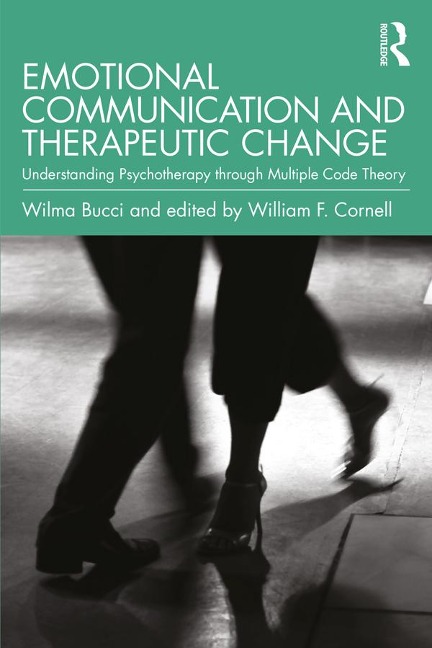
In this book, Wilma Bucci applies her skills as a cognitive psychologist and researcher to the fields of psychoanalysis and psychotherapy, opening up new avenues for understanding the underlying processes that facilitate therapeutic communication and change. Grounded in research geared to understanding and demonstrating the clinical process (rather than "outcome") of analytic inquiry and therapeutic dialogue, Bucci's multiple code theory offers clinicians, researchers, trainers, and students new perspectives on the essential, often unlanguaged, foundations of the psychotherapeutic endeavour.
Wilma Bucci is Professor Emerita, Derner Institute of Adelphi University; Co-Director of Research at The New York Psychoanalytic Society and Institute; Honorary Member of the American Psychoanalytic Association, the New York Psychoanalytic Institute and Society, and the Institute for Psychoanalytic Training and Research; Member of Faculty of the Research Training Programme of the International Psychoanalytical Association.
Part I:Evolution of the Basic Theory: Concepts and Contexts of Multiple Code Theory. 1. Symptoms and symbols: A multiple code theory of somatization. 2. The need for a "psychoanalytic psychology" in the cognitive science field. 3. The referential process, consciousness, and the sense of self. 4. Symptoms and symbols revisited : Twenty years later. 5. The power of language in emotional life. Part II:Clinical Perspectives on Emotional Communication. 6. Converging perspectives on emotional change in an interpersonal field. 7. The primary process as a transitional concept : New Perspectives from Cognitive Psychology and Affective Neuroscience. 8. The interplay of subsymbolic and symbolic processes in psychoanalytic treatment: It takes two to tango; but who knows the steps; who is the leader?. 9. Dissociation from the perspective of Multiple Code Theory: Part I: Psychological roots and implications for psychoanalytic treatment. 10. Dissociation, Part II: The spectrum of dissociative processes in the psychoanalytic relationship. 11. Emotional communication and therapeutic practice: In the consulting Room with Clara, Antonio, and Ann. 12. Nobody dances tango alone: The choreography of the analytic interchange.
Dieses eBook wird im PDF-Format geliefert und ist mit einem Adobe Kopierschutz (DRM) versehen. Sie können dieses eBook mit allen Geräten lesen, die das PDF-Format und den Adobe Kopierschutz (DRM) unterstützen.
Zum Beispiel mit den folgenden Geräten:
• tolino Reader
Laden Sie das eBook direkt über den Reader-Shop auf dem tolino herunter oder übertragen Sie das eBook auf Ihren tolino mit einer kostenlosen Software wie beispielsweise Adobe Digital Editions.
• Sony Reader & andere eBook Reader
Laden Sie das eBook direkt über den Reader-Shop herunter oder übertragen Sie das eBook mit der kostenlosen Software Sony READER FOR PC/Mac oder Adobe Digital Editions auf ein Standard-Lesegeräte mit epub- und Adobe DRM-Unterstützung.
• Tablets & Smartphones
Möchten Sie dieses eBook auf Ihrem Smartphone oder Tablet lesen, finden Sie hier unsere kostenlose Lese-App für iPhone/iPad und Android Smartphone/Tablets.
• PC & Mac
Lesen Sie das eBook direkt nach dem Herunterladen mit einer kostenlosen Lesesoftware, beispielsweise Adobe Digital Editions, Sony READER FOR PC/Mac oder direkt über Ihre eBook-Bibliothek in Ihrem Konto unter „Meine eBooks“ - „online lesen“.
Schalten Sie das eBook mit Ihrer persönlichen Adobe ID auf bis zu sechs Geräten gleichzeitig frei.
Bitte beachten Sie, dass die Kindle-Geräte das Format nicht unterstützen und dieses eBook somit nicht auf Kindle-Geräten lesbar ist.