Und dann auf "Zum Home-Bildschirm [+]".

Stöbern
genialokal zum Startbildschirm hinzufügen
Installieren Sie die genialokal App auf Ihrem Startbildschirm für einen schnellen Zugriff und eine komfortable Nutzung.
Installieren Sie die genialokal App auf Ihrem Startbildschirm für einen schnellen Zugriff und eine komfortable Nutzung.

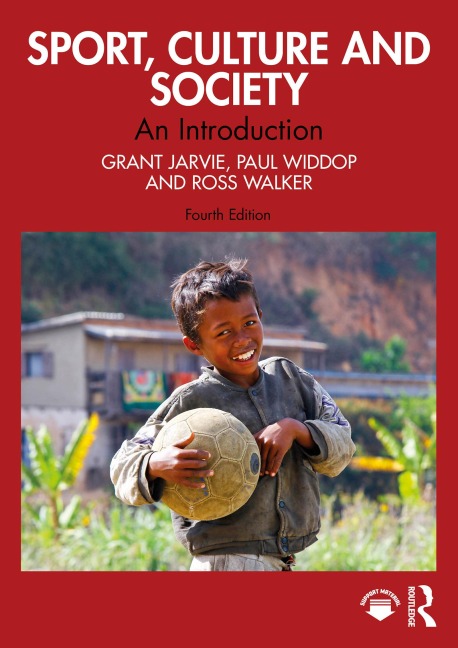
What can sport do to produce positive social change in our world today? Now in a fully revised, updated and expanded fourth edition, this critical, challenging and comprehensive textbook introduces the study of sport, culture and society. International in scope, the book challenges the reader to activate an audacious spirit of activism in and through sport. Full of contemporary examples, it places sport at the heart of the analysis and introduces the reader to every core topic and emerging area in the study of sport and society, including the history and politics of sport, gender, disability and advocacy, race and racism, violence and crime, health and wellbeing, media and digital communication, the environment, religion, poverty and sport for development and peace. This edition features new material on sportswashing, sports management, debates around the inclusion/exclusion of transgender people in sport and the Black Lives Matter movement. It also features a wider geographical range of examples and case studies, including Latin America, China, India and Africa. Each chapter offers a wealth of useful features, such as 'Sport in Focus' case studies, chapter summaries, guides to further reading, revision questions, practical projects, definitions of key concepts and weblinks. At its heart, Sport, Culture and Society is an invitation to make a difference. This is a broad-ranging, in-depth and thoughtful introduction to the sociocultural analysis of sport and sets a new agenda for the discipline. It is essential reading for all students with an interest in sport. Additionally, updated online teaching and learning resources are available, including a testbank, resource list and glossary.
Grant Jarvie is Professor, Chair of Sport and Director of the Academy of Sport at the University of Edinburgh, UK, while also being associated with the University of Toronto, Canada. A former University Vice-Principal-Provost and Chair of a National Sports Council, he has held three established university chairs and is a Director of Motherwell Football Club and advises governments all over the world. Paul Widdop is Reader in Sport Management at Manchester Metropolitan University, UK. He is a sport sociologist whose work explores the relationships between sport, culture and society. His research examines how social networks, economic structures and cultural forces shape the organisation of sport and the experiences of those who consume it. He has published widely on topics including fandom, cultural consumption and the sociology of football. Ross Walker is Lecturer in Sport Management at the University of Stirling, UK, and has worked previously at the University of Edinburgh and the University of the West of Scotland. A former international athlete, he has worked with sport organisations worldwide and at events such as the Commonwealth Games and the Homeless World Cup. Ross' research has featured in media outlets globally and won awards.
Part 1: The Broader Context. 1. Sport, Theory and Values. 2. Sport, History and Social Change. 3. Sport and Geopolitical Economy. 4. Sports Management. 5. Sport for Development and Peace. Part 2: Global Sport, Internationalism and Community. 6. Global Sport in a Deglobalising World?. 7. Sporting Landscapes, Context and Situation. 8. Sport and Consumer Culture. 9. Sport, Nationalism and Internationalism. 10. Sport, Community and Humanity. 11. Sport, Media and Digital Communication. 12. Sport and Social Capital. Part 3: Sport and Contemporary Social Issues. 13. Sport, International Relations and Foreign Policy. 14. Sport, Health and Wellbeing. 15. Sport, the Environment and Planetary Health. 16. Sport and Education. 17. Sport and Mega-Events. 18. Sport, Poverty and Homelessness. 19. Sport, Violence and Crime. 20. Sport, Racism and Black Lives Matter. 21. Sport, Gender and Transgender. 22. Sport and Disability. 23. Sport and Religion. 24. Sport and Social Class. Part 4: Sport as a Resource of Hope and the Politics of the Possible. 25. Sport and Human Rights. 26. Sport, Civil Society and Social Movements. 27. Sport, Protest and Advocacy. 28. Sport, Diplomacy and Cultural Relations. 29. Sport, Social Justice and Common Good.