Und dann auf "Zum Home-Bildschirm [+]".

Stöbern
genialokal zum Startbildschirm hinzufügen
Installieren Sie die genialokal App auf Ihrem Startbildschirm für einen schnellen Zugriff und eine komfortable Nutzung.
Installieren Sie die genialokal App auf Ihrem Startbildschirm für einen schnellen Zugriff und eine komfortable Nutzung.

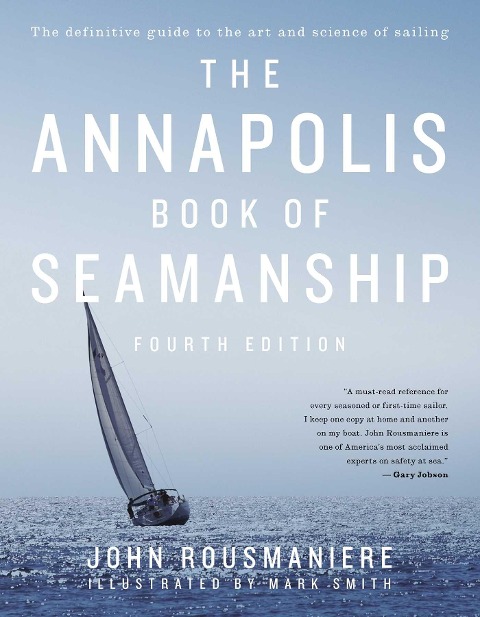

Completely revised and updated to address changes in technology, this new edition is the definitive guide to the art and science of sailing. Since the publication of the widely hailed first edition in 1983, The Annapolis Book of Seamanship has set the standard by which other books on sailing are measured. Used throughout America as a textbook in sailing schools and Power Squadrons, The Annapolis Book of Seamanship thoroughly and clearly covers the fundamental and advanced skills of modern sailing. This edition of Annapolis is a major overhaul. Over half the book has been revised; old topics and features have been updated, and many new ones have been introduced. The design has been modernized, and many color illustrations have been added. As big and detailed as Annapolis is, the wealth of technical information (including dozens of step-by-step instructions) is presented here in a way that is uniquely readable; it's both useful and easy to use. This is because John Rousmaniere and artist Mark Smith bring to Annapolis decades of experience both as sailors and as professional communicators. Annapolis emphasizes the standard skills and proven methods that eliminate error and confusion, ensure security in emergencies, and allow every sailor more time for enjoyment on the water. Much has changed on the water since 1983 when this book was originally published. Black buoys are now green, the Global Positioning Satellite navigation system (GPS) is almost universally used, new types of anchors and sails have appeared, safety skills and gear are vastly improved, many more women are commanding boats, and catamarans and trimarans are common where only monohulls used to sail. But for all these modern developments, the basic skills and spirit of sailing have not changed at all. Sail trimming, keeping up steerageway, maintaining the dead reckoning plot, heaving-to -- these fundamentals are as important now as ever and receive much attention here. Among the innovations in this edition are: * Basic skills in early chapters: Fundamental sailing and boat-handling skills and gear, which are introduced in chapters 1, 2, and 3. * "Hands On" segments: Three dozen special sections, each devoted to a particular seamanship problem and an expert solution. * More how-to tips: Additional rules of thumb that guide a crew quickly and successfully through seamanship problems. * New coverage of multihulls: Advice on evaluating, anchoring, and handling catamarans and trimarans under sail (including in storms). * More on emergencies: New material on emergencies, safety, and heavy-weather sailing, including a section on preparing a docked boat for a hurricane. * Equipment updates: Expanded coverage of the use and care of modern gear and hardware, including radar, GPS, rescue devices, and asymmetrical spinnakers. * Terminology: Full definition and illustration of major terms when they're first introduced, with alternative language provided in parentheses. * Gender: The use of feminine personal pronouns, which reflect the fact that more women are captaining and sailing boats than ever before. From navigation and seamanship to boat and gear maintenance, from pleasure cruising to heavy-weather sailing, here is the definitive, state-of-the-art guide that provides systematic step-by-step techniques to see you through every situation on deck and in the cockpit.
John Rousmaniere, a devoted sailor since youth, has some 40,000 miles of blue water behind him, including ocean passages, nine NewportBermuda Races, and other major races in small and big boats. In 2013 the US Sailing Association honored Rousmaniere's work in boating education, including The Annapolis Book of Seamanship, by presenting him with its Timothea Larr Award, which recognizes a person whose vision and guidance have made an outstanding contribution to the advancement of sailor education in the United States. He has spoken at more than 100 safety seminars and clinics across North America and served on the Safety-at-Sea Committees of US Sailing and the Cruising Club of America, the Bermuda Race Organizing Committee, and review panels of boating accidents. He is a member of the Cruising Club of America, the New York Yacht Club, and US Sailing, and serves on the selection committees of the National Sailing Hall of Fame and the America's Cup Hall of Fame. He coordinated the US Sailing Association's Arthur B. Hanson Rescue Medal program, which recognizes mariners who make rescues. John's videos include The Annapolis Book of Seamanship DVD Series. In 2014 Mystic Seaport presented him its W.P. Stephens Award for contributions to yachting history. Rousmaniere is a chronicler of the pastime he loves. He has written books about sailing history, yacht design, the America's Cup, maritime photography, and storms. His book Fastnet, Force 10 was hailed as A narrative worthy of the best sea literature. Stuart Woods said about After the Storm, No one writes about the violence of the sea better than John Rousmaniere. Descended from a French soldier who fought in the American Revolution, Rousmaniere lives in New York City with his wife, Leah Ruth Robinson. He takes special pleasure racing in classic wooden boats, cruising across the Gulf Stream in more modern ones, and exploring marshes with his grandchildren in a small catboat.
Contents Preface New in This Edition Seamanship and Romance Chapter 1: The Boat The Parts of a Boat Bending on Sails How Boats Work Boat Dimensions The Lines Plan Boat Selection Multihulls Construction Materials The Rig Traditional Rigs Sail Furling Chapter 2: Getting Under Way The Points of Sail True Wind and Apparent Wind Basic Sail Trimming Changing Tacks Stopping the Boat Personal and Boat Preparations Getting Going Boat-Handling Drills Rules of the Road Coming Back In Maneuvering Under Power Tips for Better Boat Handling Chapter 3: Sail Trim Sail Controls Sail Materials and Design Sail Types Sail Shape Determining Wind Direction Sail Trim in Light to Moderate Conditions Depowering in Fresh and Strong Winds How Boats Balance Boat-Handling Drills How to Measure Weather Helm Upwind Sailing Techniques Downwind Sailing Techniques The Spinnaker The Asymmetrical Spinnaker Sail Care and Repair Chapter 4: Weather The Daily Weather Cycle The Prevailing Southwest Wind The Thermal Effect Trade Winds Highs and Lows Fronts Low-Pressure Systems A Classic Storm Squalls Fog Weather Forecasting Weather Signs and Sayings Waves and Tides How Hard Is It Really Blowing? Chapter 5: Sail-Handling Gear and Knots Line and Rope Line Wire Rope Line Maintenance Knots The Preventer, Vang, and Topping Lift Cleats Blocks, Tackles, and Shackles Winches Chapter 6: The Sailor's Health Roles on Board Clothing Foul-Weather Gear Medical Problems First Aid Chapter 7: Personal Safety Life Jackets Staying on Board Safety Harnesses Crew-Overboard Rescue The Lifesling System Chapter 8: Rules of the Road The Rules in Summary Navigation Lights Maneuvering in Collision Situations Chapter 9: Navigation Aids Buoys Lighthouses Charts Other Publications Chapter 10: The Magnetic Compass parMagnetic North and the First Compass Magnetic North and True North Variation Parts of the Compass Compass Types Deviation Correcting Compass Error Chapter 11: Plotting and Position Finding A Navigator's Tools Magnetic or True? The Log Book and SOP The DR Setting the Course The EP and LOP The Fix The Running Fix Indirect Courses Review Quiz Chapter 12: Special Piloting Techniques Position Finding with One Aid: Distance-Off Danger Bearings and Circles Piloting with Soundings Tide and Current Guidelines for Safe Piloting Introduction to Celestial Navigation Review Quiz Chapter 13: Electronic Navigation and Radiotelephones Radio Direction Finder (RDF) Loran-C Global Positioning System (GPS) Radar Radiotelephones Chapter 14: Anchoring Ground Tackle How to Anchor Kedging-Off Weighing Anchor Chapter 15: Sailing in Heavy Weather Crew Preparation Shortening Sail Boat Handling Squalls Gales Chapter 16: Emergencies Preparation Running Aground Towing Steering Failure Dismasting Capsize Life Rafts Leaks and Sinking Fire Distress Signaling Evacuation Chapter 17: Equipment and Maintenance Running Rigging Stays and Their Equipment Going Aloft The Hull and Interior The Engine Winterizing Tools, Tape, and Lubricants Chapter 18: Traditions and Courtesies Under Way Flag Etiquette Clothing Yachting History Sailing Today Appendix I: Required Equipment Appendix II: The Coast Guard and Other Boating Organizations Appendix III: Cruising and Racing Appendix IV: Children and Sailing Glossary of Sailing Terms A Sailor's Library Index Review Quiz Answers Acknowledgments and Credits