Und dann auf "Zum Home-Bildschirm [+]".

Stöbern
genialokal zum Startbildschirm hinzufügen
Installieren Sie die genialokal App auf Ihrem Startbildschirm für einen schnellen Zugriff und eine komfortable Nutzung.
Installieren Sie die genialokal App auf Ihrem Startbildschirm für einen schnellen Zugriff und eine komfortable Nutzung.
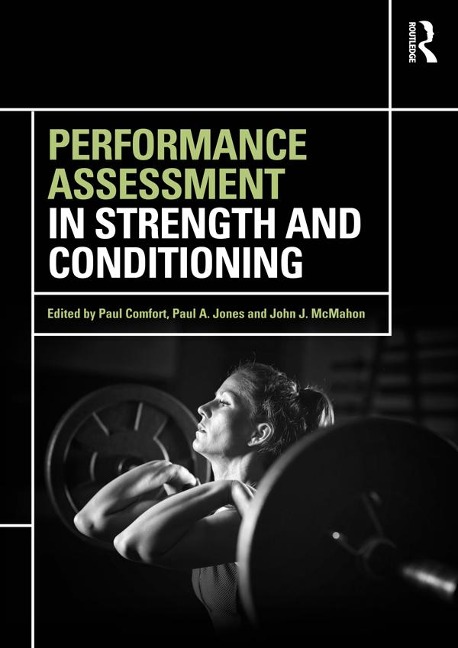
It is an essential skill for any strength and conditioning coach to be able to reliably assess the physical performance of their athletes and communicate the results and their implications to performers and coaches, alike. Performance Assessment in Strength and Conditioning is the first textbook to clearly and coherently suggest the most appropriate and reliable methods for assessing and monitoring athletes' performance, as well as including detailed sections on testing considerations and the interpretation and application of results. The book explores the full range of considerations required to reliably assess performance, including questions of ethics and safety, reliability and validity, and standardised testing, before going on to recommend (through a comparison of field- and laboratory-based techniques) the optimal methods for testing all aspects of physical performance, including: - injury risk - jump performance - sprint performance - change of direction and agility - strength - power - aerobic performance - body composition Closing with a section on interpreting, presenting and applying results to practice, and illustrated with real-life case study data throughout, Performance Assessment in Strength and Conditioning offers the most useful guide to monitoring athlete performance available. It is an essential text for upper-level strength and conditioning students and practitioners alike.
Paul Comfort, PhD, CSCS*D, ASCC, is a Reader in Strength and Conditioning and Programme Leader for the MSc Strength and Conditioning at the University of Salford, UK. Paul A. Jones, PhD, MSc, BSc (Hons), CSCS*D, BASES Accred. CSci., is a Lecturer in Sports Biomechanics and Strength and Conditioning at the University of Salford, UK. John J. McMahon, PhD, CSCS, ASCC, is a Lecturer in Sports Biomechanics and Strength and Conditioning (S&C) at the University of Salford, UK.
Introduction: The Role of Assessing and Monitoring Performance Part 1: Testing Considerations 1. Ethical and Health and Safety Issues 2. Psychological Issues during Assessment of Performance 3. Reliability, Validity and Measurement Error 4. Standardisation of Testing 5. Structured Testing vs. Continual Monitoring Part 2: Assessment Methods 6. Assessment of Factors Associated with Injury Risk 7. Vertical Jump Testing 8. Sprint Testing 9. Change of Direction and Agility 10. Strength - Isometric and Dynamic Testing 11. Assessment of Power 12. Aerobic Performance Assessment 13. Body Composition Assessment 14. Combined Assessment Methods Part 3: Interpretation and Application 15. Interpretation of Results 16. Presentation and Communication of Results 17. Application to Training
Dieses eBook wird im PDF-Format geliefert und ist mit einem Adobe Kopierschutz (DRM) versehen. Sie können dieses eBook mit allen Geräten lesen, die das PDF-Format und den Adobe Kopierschutz (DRM) unterstützen.
Zum Beispiel mit den folgenden Geräten:
• tolino Reader
Laden Sie das eBook direkt über den Reader-Shop auf dem tolino herunter oder übertragen Sie das eBook auf Ihren tolino mit einer kostenlosen Software wie beispielsweise Adobe Digital Editions.
• Sony Reader & andere eBook Reader
Laden Sie das eBook direkt über den Reader-Shop herunter oder übertragen Sie das eBook mit der kostenlosen Software Sony READER FOR PC/Mac oder Adobe Digital Editions auf ein Standard-Lesegeräte mit epub- und Adobe DRM-Unterstützung.
• Tablets & Smartphones
Möchten Sie dieses eBook auf Ihrem Smartphone oder Tablet lesen, finden Sie hier unsere kostenlose Lese-App für iPhone/iPad und Android Smartphone/Tablets.
• PC & Mac
Lesen Sie das eBook direkt nach dem Herunterladen mit einer kostenlosen Lesesoftware, beispielsweise Adobe Digital Editions, Sony READER FOR PC/Mac oder direkt über Ihre eBook-Bibliothek in Ihrem Konto unter „Meine eBooks“ - „online lesen“.
Schalten Sie das eBook mit Ihrer persönlichen Adobe ID auf bis zu sechs Geräten gleichzeitig frei.
Bitte beachten Sie, dass die Kindle-Geräte das Format nicht unterstützen und dieses eBook somit nicht auf Kindle-Geräten lesbar ist.